
News/Blog
Help shape our new website
-270.png)
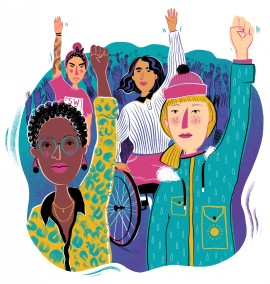
We know that for many people the Scottish Women's Rights Centre (SWRC) website is often the first place to look for legal information in relation to gender based violence.
We want to make sure that it’s as helpful as possible, and that people can get access as quickly as possible to whatever they’re looking for.
Spiking by injection: what are your rights?
Spiking occurs when someone puts drugs or alcohol into another person’s drink (or otherwise into another person’s body) without their knowledge and/ or consent. Spiking someone makes them more vulnerable to other misconduct, such as sexual harassment, sexual assault, and rape.
Doxing: what is it and what are your rights?
-1575998935-270.png)
The sharing of someone else’s private information on the internet without their consent is known as ‘doxing’ and can have very dangerous consequences. It is a form of online harassment and there are legal options available to people who have been ‘doxed.’
Fake Images, Real Crime: support for dealing with deepfakes
-270.png)
The sharing of intimate images or videos (or threats to share them) without consent is a form of online sexual harassment. This is a criminal offence, whether the images are real or digitally altered. This means that the criminal offence can apply to images and videos manipulated using technology, such as photoshop or Artificial Intelligence (AI) used to create ‘deepfakes’.
Raising a claim for sexual harassment in an employment tribunal: time limits

If you experience sexual harassment at work, you may want to make a claim in an employment tribunal. To do so, you need to make the claim within three months (minus one day) of the incident. In this blog, we outline the options available if you experience sexual harassment at work, and why we think the three-month time limit should be extended.
 RSS
RSS